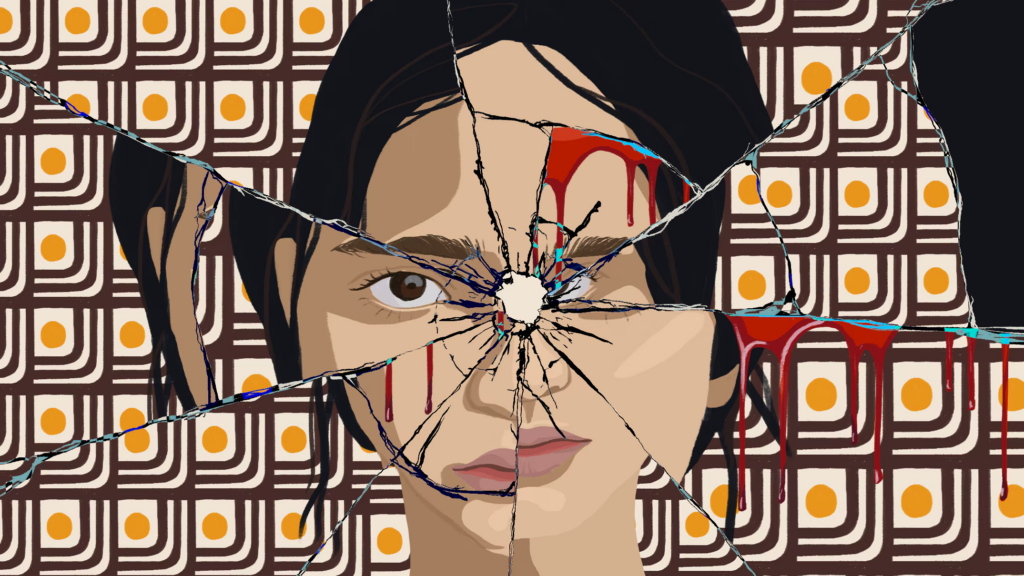
Header image by artist Emma Machan
Domenique Lozano, Leyla Modirzadeh
ICU follows five Iranian women during the 2022 “Women, Life, Freedom” protests. When the regime shoots protestors in the eyes to silence them, these women persist and find ways to survive—through humor, defiance, and impossible courage. A play about what it costs to demand your humanity, and what it takes to keep fighting. With some laughs.
Written by Domenique Lozano and Leyla Modirzadeh.
Josh Kornbluth interviewed the ICU artists
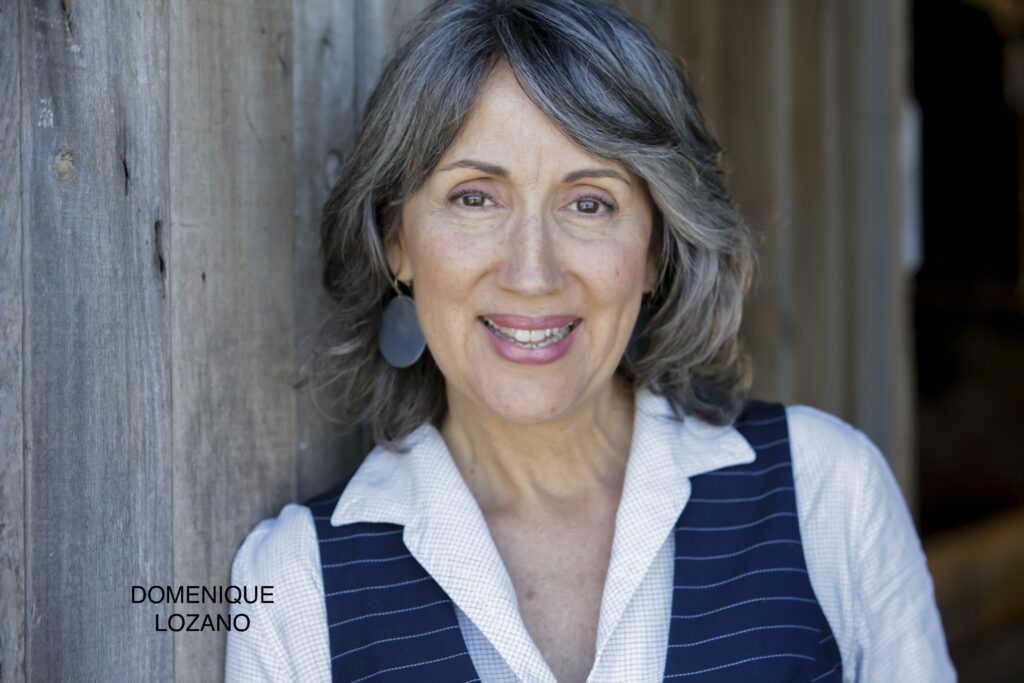
Domenique Lozano is a west coast-based Director, Actress and Educator. She’s worked as a Resident Artist with the American Conservatory Theatre and Associate Artist with California Shakespeare for 15 seasons. Directing credits include Pretend It’s Pretend (Ashland New Play Festival), The Merry Wives of Windsor, The Wolves (SOU), Much Ado About Nothing (Marin Shakespeare), The Comedy of Errors, The Importance of Being Earnest (SPARC Theatre), The Caucasian Chalk Circle, (St. Mary’s College), A One Man Show, Orlando, Drawer Boy and Welcome Home Jenny Sutter (TheatreFirst), A Christmas Carol, Happy to Stand (ACT), Tartuffe, Curly Fries- a webisode series, Men on Boats, (UC Berkeley). Acting credits include work with Cal Shakes, A.C.T., Berkeley Repertory Theatre, CenterRep, Rogue Theatre Company, and the Oregon Shakespeare Festival. Translation work includes Schiller’s Don Carlos, (premiere New Strands Festival at ACT), and Brecht’s The Caucasian Chalk Circle, (ACT).
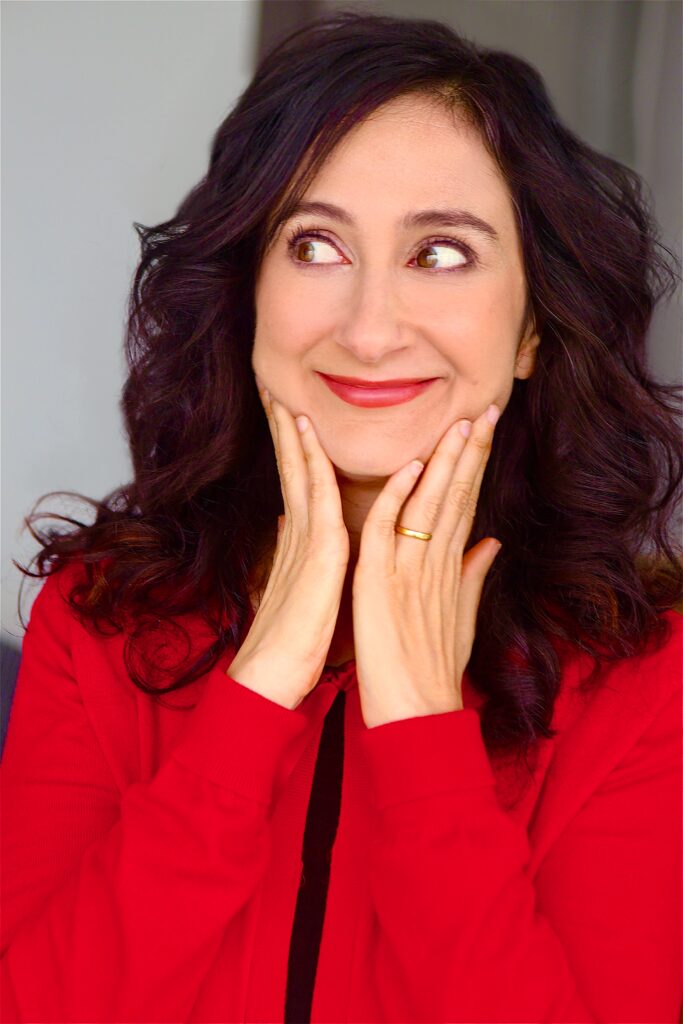
Leyla Modirzadeh (co-writer) is an Iranian-American artist, actress, and director. She has performed in theaters across the country including Cincinnati Playhouse, A Contemporary Theatre, The Group Theatre, Wisdom Bridge Theatre in Chicago, Speakeasy Stage in Boston, The Kennedy Center in DC, La Mama ETC and New York Theatre Workshop in New York. She is currently performing at the Indiana Repertory Theatre as Roya in English. In addition to her professional stage work, Leyla is known for her collaborations with renowned theatre artist Ping Chong. She has a BA in Humanities from UC Berkeley, MFA in acting from University of Washington. https://www.leylamodirzadeh.com/
THE PLAY
Mahsa Amini’s death at the hands of Iran’s brutal morality police sparked a fire in the women and girls of Iran, that spread into the huge national protests of “Women, Life, Freedom”, or “Zan, Zandegi, Azadi”. This play is inspired by these events.
ICU is a full-length play still in development, that illuminates the events and human experiences of Iran’s 2022-2023 “Women, Life, Freedom” protests through the intersecting lives of five women. Because of the current events transpiring in Iran, and the brutal response of the regime against the protestors we wanted to get the story out sooner rather than later. Enter the solo version of ICU, where we have adjusted the shape and container of the play, but the landscape and viewpoint remain the same. This is the first public sharing of this solo version and a work-in-progress. Many parts will have the artist holding a script.
The title, ICU, operates on three simultaneous levels:
1. It references the Intensive Care Units where injured protesters are hunted by regime forces.
2. It declares “I see you”—the fundamental demand of protestors to be witnessed and recognized.
3. It evokes the eye itself, that miracle of sight which becomes both weapon and symbol throughout the narrative.
The Iranian security forces’ tactic of shooting protestors specifically in the eyes is not metaphorical—it is a documented strategy. By targeting vision, they accomplish multiple objectives: they identify protestors when they seek medical care, create visible marks of punishment and warning, and literally rob people of their ability to see and be seen. They turn the eye—that organ of witness and connection—into a site of terror.
But in making sight a weapon, the regime also makes it a symbol of resistance.
The play begins on a morning in the midst of the Women Life Freedom movement. There’s hope in the air. The narrative then moves chronologically forward, tracking the aftermath of this specific day and night.
CHARACTERS
Daria – fifteen years old and luminous with the particular courage of youth that doesn’t yet fully comprehend mortality. She’s all possibility, all forward motion, full of passion, full of the confidence that she can change the course of things. She sneaks away to join the protests without her parents’ knowledge because she cannot fathom not participating in the creation of a more just world. Daria represents not just innocence but the future itself—what Iran could become if her generation were allowed to flourish. She represents what’s at stake when regimes brutalize their own children, and her trajectory through the play asks: what happens to hope when it meets calculated violence?
Zoha – she’s spent twelve years studying in the United States to become a medical doctor. Finally able to return to Tehran to visit family, she carries the particular displacement of someone who’s left their homeland for many years, only to realize they no longer fully belong to either culture. She sneaks to the protest, intending only to witness from a distance, to observe rather than participate. But witnessing pulls her inward—she can’t remain safely at the margins. Her character arc explores the question of responsibility: what do we owe to the places we’ve left? Can you return home after becoming someone else?
Tara – Zoha’s sister, she works as a nurse at a Tehran hospital. Tara doesn’t attend protests wanting to remain neutral, outside of the political landscape. She tries to walk an impossible line: appearing compliant enough to avoid regime suspicion while using her position to care for injured protestors who arrive at the hospital. She embodies the compromises that survival demands of us, the daily negotiations with power that exhaust the soul. Through Tara, we explore what the cost of staying is, of continuing to live inside a system that’s designed to crush you.
Shabnam– she’s middle-aged and tired. She’s participated in movements before, knowing how these stories tend to end. But she’s determined to show up, to continue to resist even without the fuel of hope, operating instead on something more concrete, more durable: commitment. Shabnam carries the weight and the bitterness of historical disappointment and yet finds a unique humor inside of refusing to abandon the struggle. She’s seen too much to be shocked anymore.
Zaftab – she’s twenty-five, privileged, her glass perpetually half-full. She comes to the protest seeking meaning, wanting to participate in something larger than her comfortable life. Zaftab’s natural enthusiasm and optimism create friction and comedy against Shabnam’s weariness and bluntness, but it also reveals a different kind of strength. Zaftab comes to the resistance primarily through her curiosity and a desire to be part of a meaningful collective action.
Habib – Zaftab’s brother, and eventually a friend to Shabnam. A loving brother whose shyness is transformed into determination and courage.
Acts of Resistance: Small and Large
Resistance in ICU operates across a spectrum, from gestures so small they’re almost invisible to sacrifices that reverberate across the narrative.
Small resistances include: singing the Beatles’ “Come Together” in a prison visiting room, the melody itself a declaration of solidarity; a nurse who delays unlocking a door for thirty crucial seconds, allowing someone to hide; the bringing of food to a prisoner when resources are scarce; the smuggling of letters, the persistence of laughter when everything insists on grief.
Larger resistances include: attending protests despite the certainty of violence; embracing the loss of an eye not as an end but as fuel for continued action; and the ultimate resistance of choosing the direction of your fate.
And then there are the resistances that exist in the liminal space between self-destruction and self-determination. In one story line, police forces capture a young protestor and attempt to throw her from the roof of a parking structure. In the moment before they can complete this act—before they can claim this violence as their victory—she escapes their hands and chooses to step off the edge herself. Is this suicide or is it reclamation; is it despair or is it the final assertion of agency? How do we understand the impossible choices that tyranny creates?
Holding Multiple Truths
The Iranian women we are writing about—and the Iranian diaspora we are in conversation with—are not one-dimensional. They are funny. They are petty. They get crabby. They come to a larger understanding of themselves. They find unexpected courage. They contradict themselves. They are, in other words, fully human.
ICU insists on holding multiple truths simultaneously: This is happening and it is unbearable; this is happening and people are still laughing. This is happening and it might fail; this is happening and it is already succeeding. These women are victims of state violence; these women are architects of resistance. Hope is inherent; hope is a choice.
Current Relevance
While ICU is specifically about Iran’s “Women, Life, Freedom” movement, it speaks to this moment of global democratic backsliding. The current events unfolding in Iran, and the brutal crackdown on the people of Iran, demand that we see and name what is happening and that we globally come together to support the people of Iran in achieving freedom and self-determination.
Authoritarian leaders worldwide are deploying similar tactics: controlling women’s bodies as a means of asserting state power, targeting youth movements, using violence to instill fear, attempting to make resistance invisible by literally and figuratively blinding populations to injustice through censorship.
The play asks questions that transcend geography: How do those without institutional power stand against impossible power structures? Can we loosen the grip of tyranny? Is it possible to find grace inside brutality? How do we engender hope not as naive optimism but as active practice? What are the human costs of this moment on our planet, and what are the human triumphs happening in the margins of despair?
These are not rhetorical questions. They are the questions that define our contemporary moment.